
Motonaga Sadamasa
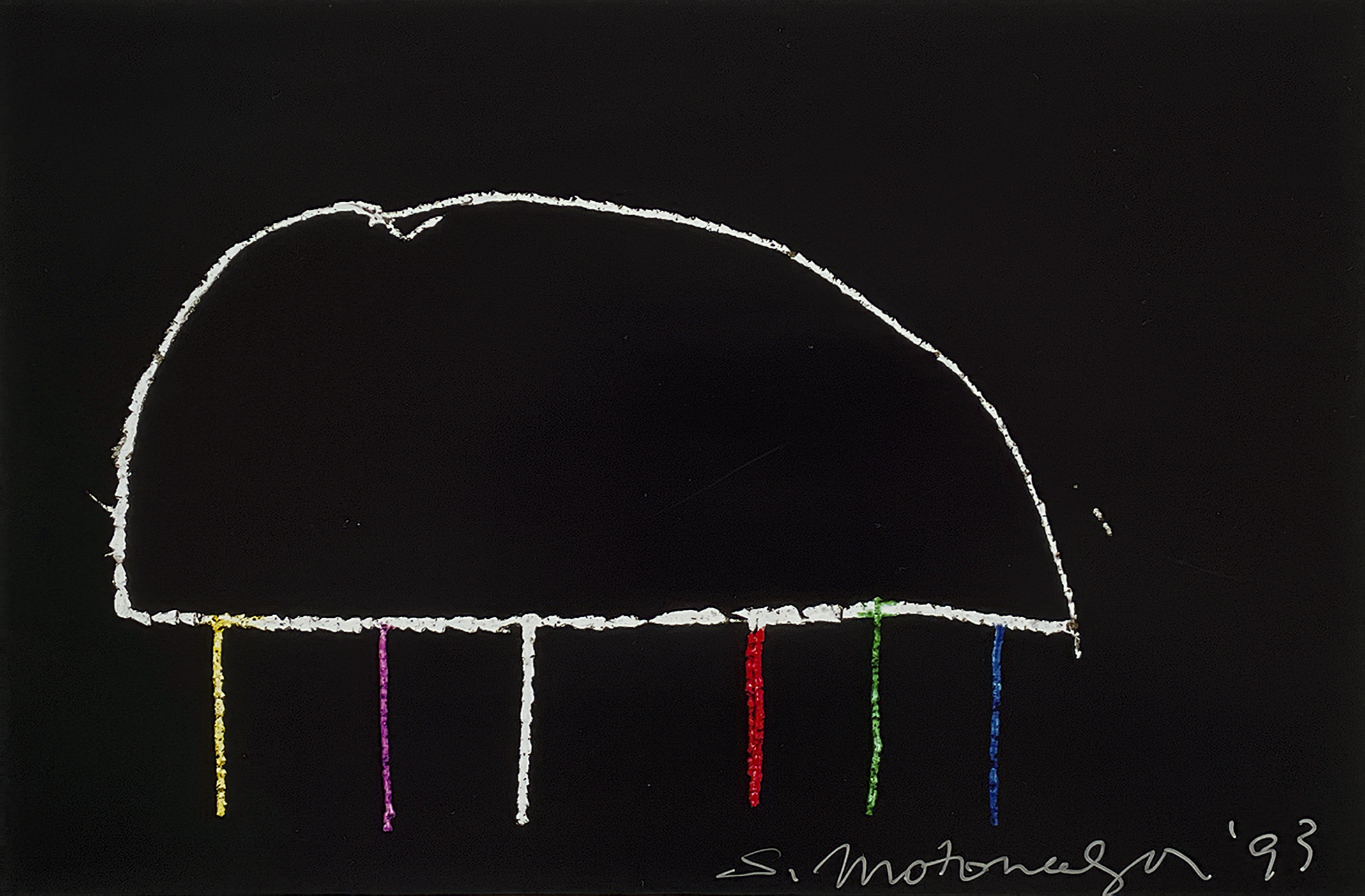
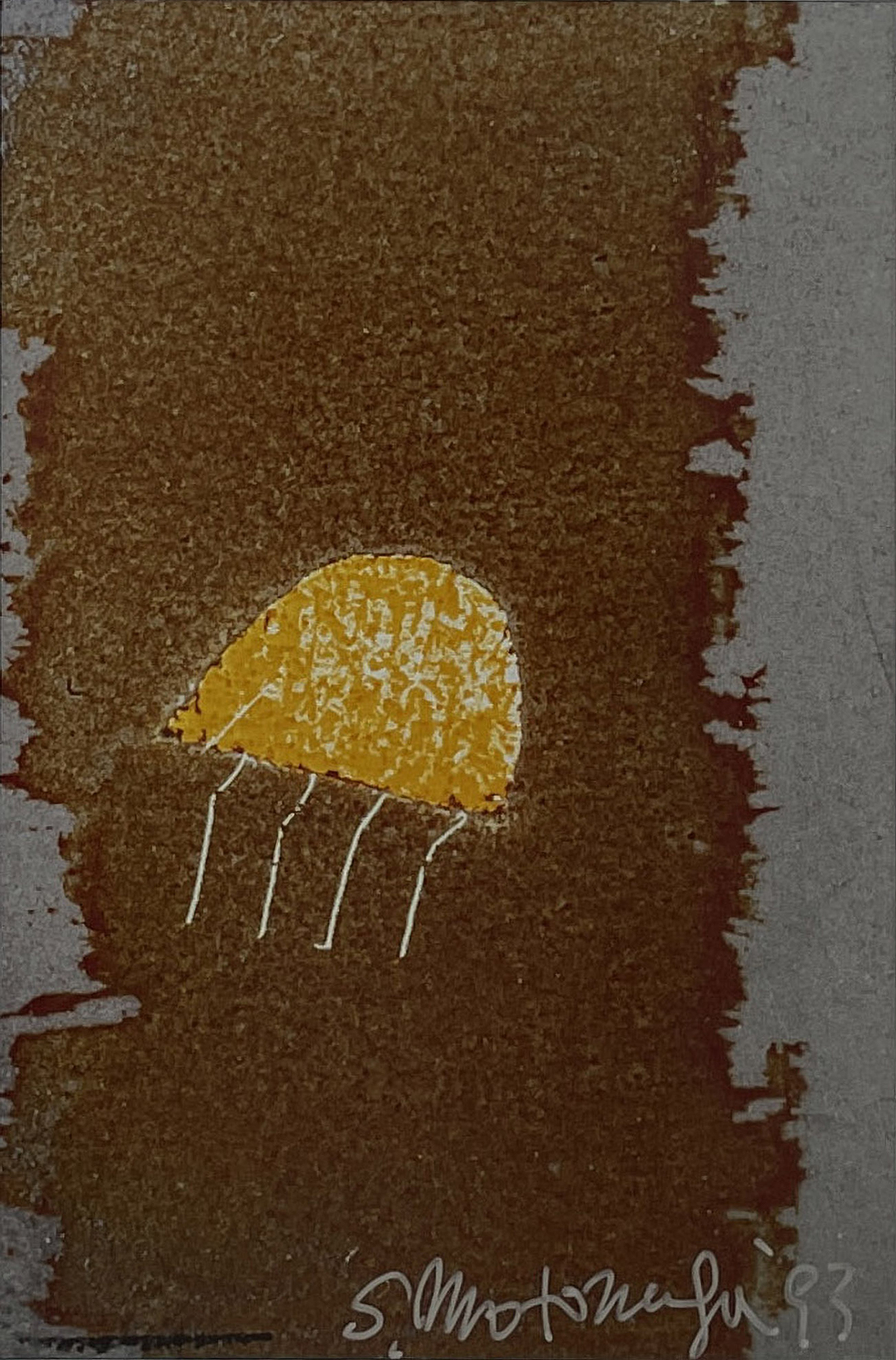
Motonaga was a member of the legendary Gutai Art Association (1954–71), which became famous for groundbreaking performance works and innovations in painting, sculpture, and installation art. He emerged at a time when a post-atomic surrealist existentialism was at the forefront of artistic development in Japan. However, Motonaga chose a different path, turning his back on the destruction wrought by the war in order to create paintings, sculptures, and performances that were fresh, jubilant, and playful.
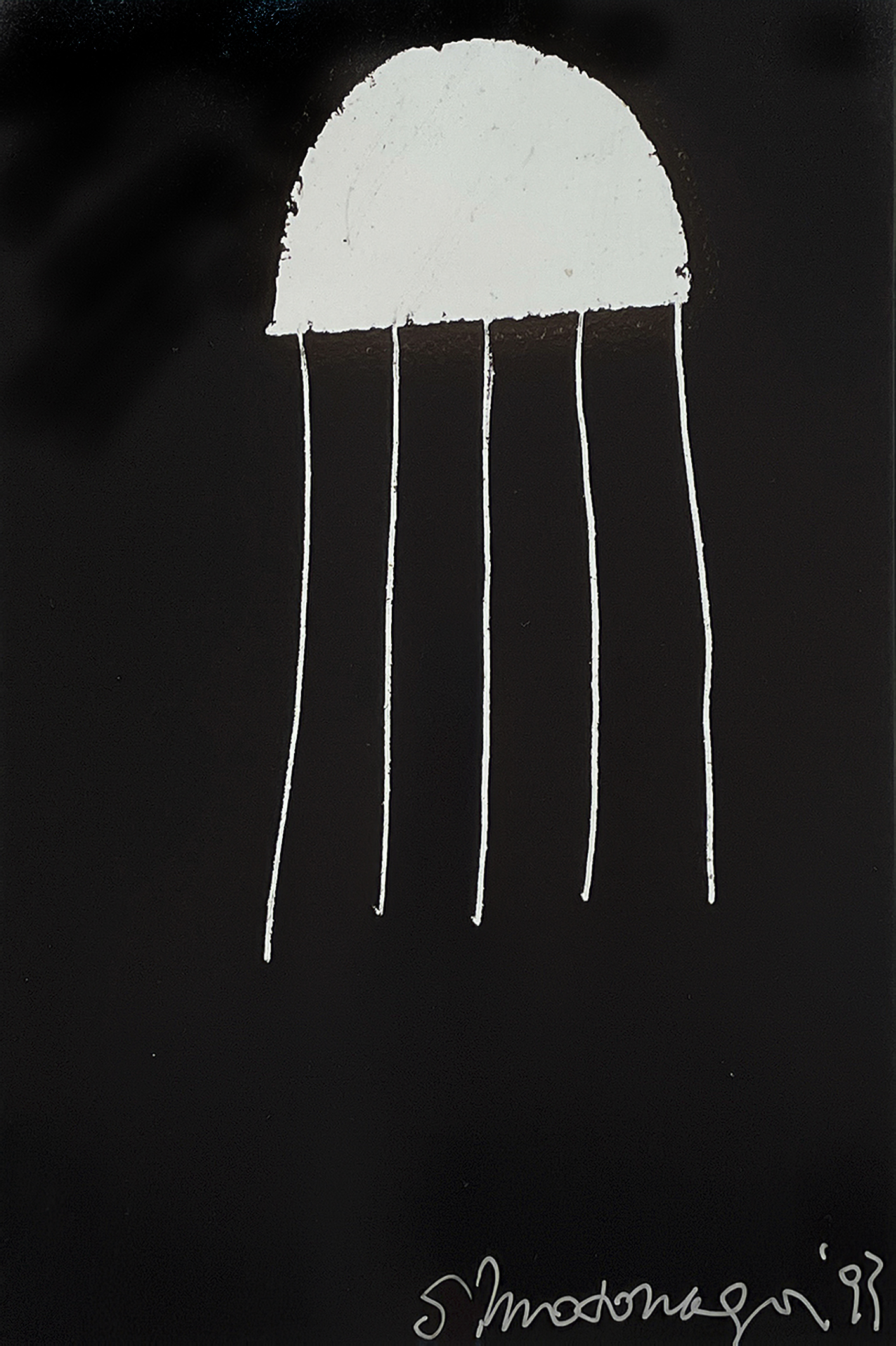
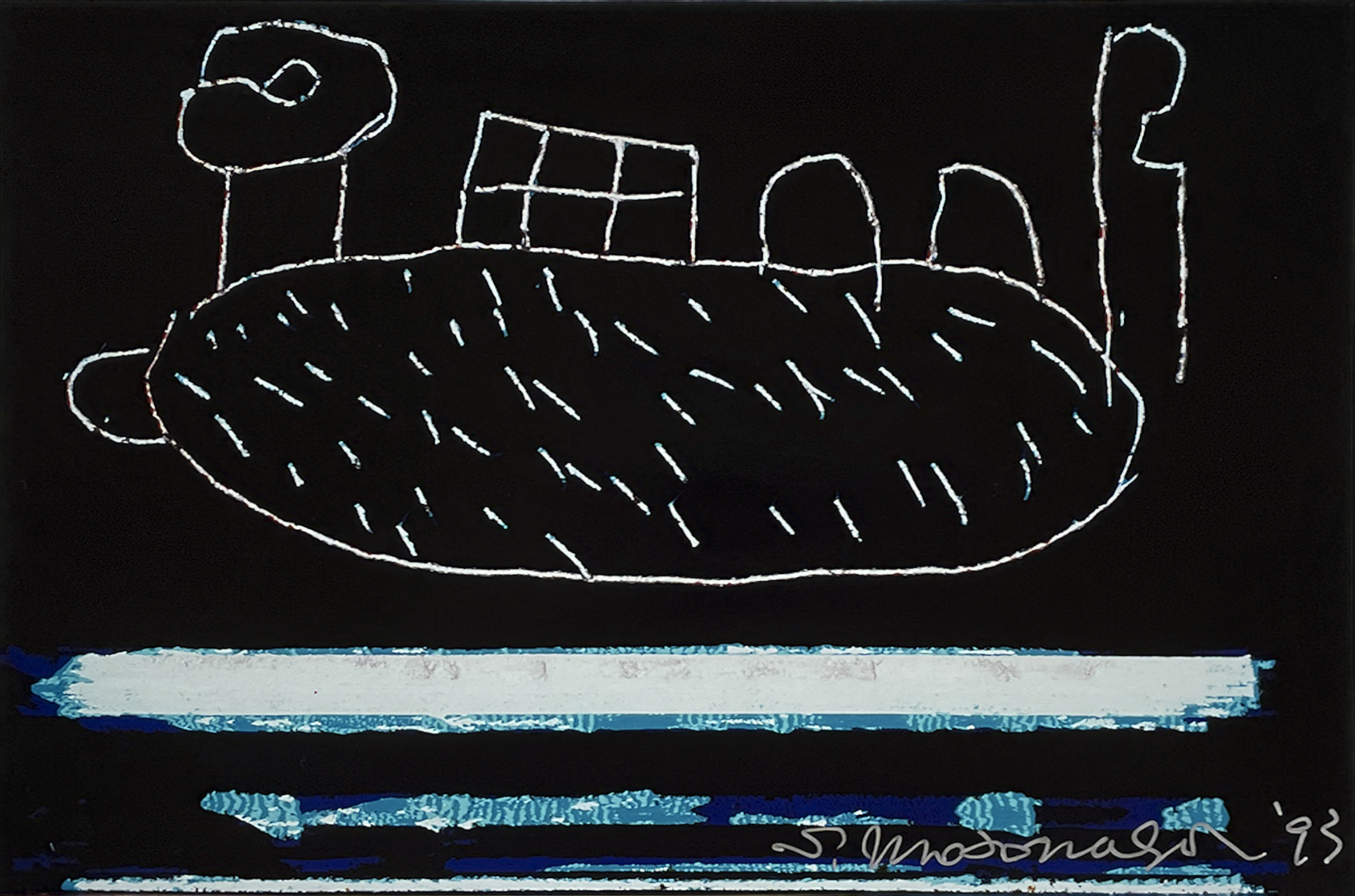
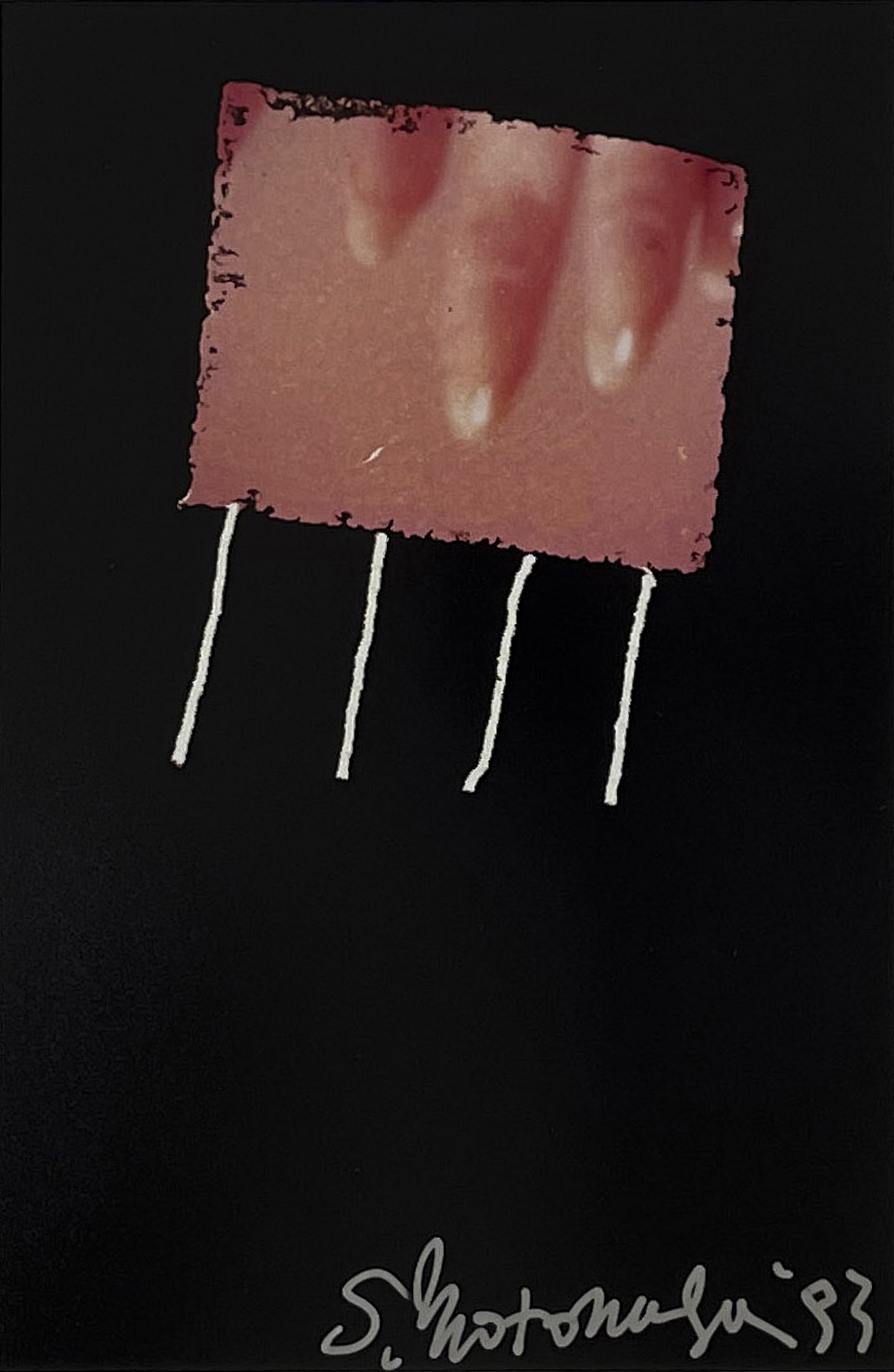
In 1954, he began employing a vocabulary of embryonic shapes, flying objects, and cartoon-like forms, modeled in heavy oil paint, that revealed his interest in children’s art, manga, and popular culture, and collapsed distinctions between high and low art. By 1957, Motonaga’s work had become more abstract and featured flowing lines and pools of brightly colored pigment poured and dripped onto the canvas. This “classic style,” which developed concurrently with Morris Louis’s Veil paintings, occupied Motonaga until the mid-1960s, when his anthropomorphic sensibility returned in paintings featuring extruded and knotted forms that were delicately modeled with airbrush.
Thereafter in the 1970s, the artist’s scratchy hand-drawn forms reappeared along with the use of canned spray paint, creating a style that was fresh and raw, akin to graffiti and animation. Motonaga occupied a unique position in the Japanese art world, creating a distinct visual continuity between the artists and imagery of the immediate postwar era and the concerns that emerged in the work of contemporary painters such as Takashi Murakami, Yoshitomo Nara, and beyond.
WORKS
Biography
| 1922 | Born in Iga, Mie Prefecture(November,26) |
|---|---|
| 1955 | Joined the Gutai Art Association(left in 1971) |
| 1966 | Visited the United States by the invitation of the Japan Society,went back to Japan next year |
| 1970 | Participated in the Gutal Art Festival at the he festival plaza at Expo'70 |
| 1996 | Appointed as a Professor in the Department of Fine Arts, Faculty of Art and Design, Seian University of Art and Design |
| 2011 | Died at the age of eighty-three(October,3) |
Awards
| 1983 | Japan Arts Grand Prize |
|---|---|
| 1986 | Hyogo Prefectural Cultural Award |
| 1988 | Conferred the Chevalier de la Légion d`Honneur by the French government |
| 1991 | Awarded Medal with Purple Ribbon by the Japanese government |
| 1992 | Osaka Art Prize |
| 1997 | Awarded the Order of the Rising Sun, Gold Rays with Rosette,4th Class |
| 2002 | Mie Prefectural People's Meritorious Service Award Cultural Award |
Selected Solo Exhibitions
| 2023 | Motonaga Sadamasa: Photography. The Third Gallery Aya, Osaka |
|---|---|
| 2022 | Motonaga Sadamasa: The100th anniversary of his birth; Mie Prefectural Art Museum. Tsu 2014, Sadamasa Motonaga |
| 2009 | Sadamasa Motonaga. Mie Prefectural Art Museum, Tsu |
| 2005 | Sadamasa Motonaga. Nagano Prefectural Shinano Art Museum, Nagano |
| 2003 | Sadamasa Motonaga. Hiroshima City Museum of Contemporary Art, Hiroshima 2002 |
| 1985 | The world of Sadamasa Motonaga. Hyogo Prefectural Museum of Art, Kobe |
Selected Group Exhibitions
| 2022 | Into the Unknown World — GUTAI: Differentiation and Integration, Nakanoshima Museum of Art, Osaka, Japan |
|---|---|
| 2015 | Splendid Playground. Guggenheim Museum, New York |
| 2013 | Between Action and the Unknown: The Art of Kazuo Shiraga and Sadamasa Motonaga. Dallas Museum of Art, Dallas |
| 2006 | Zéro. Musée d’art moderne et contemporain de Saint-Étienne, Saint-Étienne |
| 1981 | ArtPop–Japan. Institute of Contemporary Arts, London 1955 |
Selected Public Collections
| Dallas Museum of Art, Dallas Hyogo Prefectural Museum of Art, Kobe Museu de Arte Moderna do Rio de Janeiro,Rio de Janeiro The Museum of Modern Art [MoMA], New York The National Museum of Art, Osaka The National Museum of Modern Art, Kyoto Tokyo Metropolitan Art Museum, Tokyo |